I have learned so much through this research course. The
most valuable lesson I learned is that I do not have to read the entire paper
to know what the research is about. I also learned how to conduct a research
and focus on one aspect instead of a broad issue that will make it difficult to
study. One of the challenges for me was finding the topic to research. Making
sure you create a schedule and stick to it is very important. I am so glad we
made it through this course. I will use what I have learned in the future when
it comes to research papers. Good luck to all of you in you r next classes to come.
Sunday, December 22, 2013

Sunday, December 1, 2013
Research Around the World
Research
around the World


The Early
Childhood Development Virtual University (ECDVC) is a program that addresses ECD
capacity building and leadership development in Africa. They have a large
support group that ranges from international, local, and employees of the participants.
Their mission is to further develop African ECD leadership capacity as a key
strategy in support of child, family and community well-being and broader
social and economic development. It is a unique
training and results-oriented program that uses face-to-face and distributed
learning methods including: residential seminars, web-based instruction, CD-Rom
and print material support, and a 'community of learners' strategy within and
among cohort countries (www.ecdvc.org).The
ECDVC is currently working on a great amount of research projects that span
across Africa. Below you will find some of their projects and the students that
are performing the study along with the country they are representing.
|
Student
Name
|
Country
|
Project
Topic
|
|
Wunesh
Woldeselassie Bairu
|
Nigeria
|
Curriculum
Development Using Community Resources
|
|
Rosemary
Hua
|
Nigeria
|
Involving
Fathers in Early Childhood Care and Development
|
|
Celestina
Ibetoh
|
Nigeria
|
A Guide
for Effective School and Parent Collaboration: A Cooperative Development and
Delivery Approach
|
|
Abeba
Habtom
|
Eritrea
|
Improving
the Quality of Childcare Through Parenting Enrichment and Training of
Trainers: The Eritrean Model
|
|
Chalizamudzi
Matola
|
Malawi
|
Assessment
of Interaction and Stimulation in
Single-Mother Low-Income Families
|
The
topics that I chose to highlight are topics that can involve my research
stimulation which is parental involvement. As you can see, this Virtual University
is committed to improving the quality of life for children and their families
in Africa. As I look farther into this website they offer you an opportunity to
review their evaluation reports so that you can see the authenticity of and
benefit of the program. I enjoyed traveling through this virtual university.
References
Saturday, November 16, 2013
Research That Benefits Children and Families
Research That Benefits Children and Families
If I could do research
without any restrictions I think I would choose the long term effect on
children born addicted to drugs and exposure to drugs at a young age. I have
never really witnessed a child born with an addiction to drugs but I know that children
born with an addiction or from addictive parents have poor nutrition and have difficulty
in exercising self-control as toddlers and unusually become angry and
aggressive. Children born and exposed to drugs have high medical risk and
developmental problems ranging from physical, social, emotional, and cognitive.
I would like to know with early intervention how it would change their lives
versus the children who are not fortunate enough to receive early intervention.
I feel that doing research on this topic
will help families and professionals know the true effect drugs have on
children and how early intervention and prevention can make life easier for the
children and family. Also it will help educators and other professionals in the
early childhood field better reach and teach children that are victims of drug
abuse whether they are born with drugs in their system or exposed to it early.
Sunday, November 10, 2013
Research Stimulation
The topic I chose to research is the understanding of death and the fear of death in young children. I feel that it is important for children to understand the meaning of living and non-living and not be afraid of the word. Just because we do not talk about it doesn’t mean children do not want to know. I feel it is best to give them a clear but child friendly and honest understanding instead of allowing them to partake in fictional thoughts. Fellow classmates, if there is any information that you come across regarding understanding death and overcoming the fear of death in young children please pass it along, I will greatly appreciate it. Hopefully, I won’t change my mind about my topic, there is so much I want to know more about regarding early childhood.
Saturday, October 26, 2013
Week 8 Final Blog
Through this course I have learned so much. The consequences
from learning about issues and trends in other countries are beneficial to my
studies. Connecting with teachers and other early childhood professionals is a
great resource to find out some of their ways of teaching and how they solve
the problems in their country. Learning about the struggles in South Africa was
really heart breaking. Children that want to learn cannot because they have to
take care of their younger siblings or work because there isn’t enough money
for them to provide for their families. Together working with other
professionals locally and globally we can work together to better the children
through communication. I enjoyed learning about how other early childhood
programs work. Through communication we can discuss ideas on how to make
programs and curriculum work. Throughout this course I had a chance to meet
great classmates and other professionals. I wish everybody good luck through
the rest of your journey.
Thursday, October 17, 2013
International Contacts Part 3
While exploring the site UNESCO, we seem to share a
lot of views. I looked into their quality tab. I believe the same as they do as
far as high quality childcare for children from disadvantage backgrounds. The
UNESCO believes that high quality childcare promotes motivation, confidence,
good cognitive and linguistic development and school readiness (www.unesco.org);
which are characteristics I feel will make a high quality childcare. I looked
deeper in the section for Africa, and how they determine a high quality
teacher. I listened to their staff interview on the website. I have copied the
url so that you can listen in as well.
The website is http://www.youtube.com/watch?feature=player_embedded&v=qWdZm7KhvVw.
In Africa, they celebrated their world teachers’ day and that is when they set
up interviews for teachers. This website is incredible and full of information.
I plan on being the best child advocate I can be and to educate other teachers
so they can reach their goals.

Sunday, October 13, 2013
Sharing Web Resources Week 6
The website I chose
to explore more is http://eclkc.ohs.acf.hhs.gov/hslc.
It provides so much information about the function of head start programs.
However due to the government shutdown there were some areas that were not
updated. I explored the tab titled school readiness and the first thing that
caught my eye was the title Raising Quality in Head Start. I researched the Use
of Classroom Assessment Scoring System (CLASS) in Head Start. It provides a
list of frequently asked questions and the use and importance of the assessment
system. As I continued to look through the website there are a lot of useful
and resourceful information for professionals in the early childhood field to
gain more knowledge.
Reference
Sunday, October 6, 2013
Getting To Know Your International Connections Part 2
I explored http://developingchild.harvard.edu/initiatives/global_initiative
for this week’s blog. I only
focused on three new ideas/ insights that I gained about early childhood
systems around the globe.
For
example, according to Global Children’s Initiative they view healthy
child development as the foundation of economic prosperity, strong communities,
and a just society, and our mission is to advance that vision by using science
to enhance child well-being through innovations in policy and practices. The Global
Children’s Initiative is focused on three strategic objectives:
To reframe public discourse about the
early childhood period by educating
high-level decision-makers about the common underlying science of learning,
behavior, and health;
To support innovative,
multidisciplinary research and demonstration projects in selected
countries or regions to expand global understanding of how healthy development
happens, how it can be derailed, and how to get it back on track; and
To build leadership capacity in child
development research and policy among
individuals and institutions in low- and middle-income countries in order to
increase the number and influence of diverse
perspectives that are contributing to the global
movement on behalf of young children.
As an advocate of early childhood and children everywhere,
it is great to see that universities and countries across the world are doing
their part in trying to ensure the overall healthy development both physical
and mental as well as the well-being and safety of children so that they can
grow into productive adults.
Reference
http://developingchild.harvard.edu/initiatives/global_initiative
Sunday, September 29, 2013
Sharing Web Resources 2
Connecting with different
countries and different programs has really helped me in understanding
different ways people view early childhood and the similarities that they all
share. I really find the e-newsletter Early Childhood News very informing. It
touches on different issues and concerns across the board. It provides
resources for teachers and parents. Another resource is the Head Start program.
It allows me to view different cultures and families throughout the world. The
NAEYC is also an important resource that I have become very familiar with as I
continue my studies in Early Childhood. Every resource is very useful and
important. Other than reading articles, I like connecting with other
professionals throughout the world. Speaking to people and hearing their
advice, testimonies, concerns, etc. is one of the most reliable and valuable resources.
Every resource has really helped and provided information to guide me through
my course and career.
Sunday, September 22, 2013
Getting To Know Your International Connections
With much joy, I was able
to get in contact with a relative that has been studying in Africa for the past
2 years. I asked her several questions about the poverty in Africa. She is
located in South Africa in city called Cape Town.
Me: How is poverty in Cape
Town?
Relative: When I first
landed in Africa the airport was beautiful but when you got on the road it was
a township in the center of all this beauty and modernization of South Africa.
The poverty is right in the middle of progress which is very shocking. There
are three major townships; Langa (which means “Sun”), Nyanga (which means “Moon”),
and Gugulethu (which means “Our Treasure”).
Townships are homes that all of the poor Africans live in. Townships are
homes that are built out of tin majority have no electricity or water. When
visiting these townships you should have an escort because there are no street
signs, so you need to be accompanied by someone who knows their way around.
Me: How does this affect
the children?
Relative: There is no
playground or grass for the kids to play safely. The kids do not have a place
to study and they live in a place of filth and they are prone to more diseases.
Even though the kids are poor and they do not have much at all, they seem
really happy playing with their stick and rocks. : Children ages 0-4 years top
20 reasons of death is because of HIV/AIDS. In 2007 60% of children were dying
because they were underweight for their age and 50% was because they were in
stages 3 and 4 of HIV.
Me: Are there any
improvements?
Relative: The Government
built an Apartment Building. These buildings are very old and rundown but it is
a step up from the shacks. However, they are still located in the townships. In
one apartment there are three rooms with three beds in each room. It is not
setup where one bed is for one person, one bed is for one entire family. Some
of the apartments are still without electricity and running water.
Me: How are the schools?
Relative: The schools are
only three mini buildings. The school that I visited was a secondary school
with only three rooms for fifth, sixth, and seventh grade. There are not enough
desks, the books are few and outdated; there are no windows and nothing to
protect them from the rain and winter. There is no cafeteria, no playground,
and no gym. There are a lot of students because they are eager to learn.
Parents are expected to pay for their child to go to school, which is hard for
many because they are ill and have AIDS and other diseases.
Me: How do you fix poverty?
Relative: Fix the family
structure. There needs to be health care coming to the family regardless of
their current health situation. There needs to be education provided for these
parents and job placement programs. A lot of children drop out of school after
secondary because they need to help support the family or raise their younger
siblings because their parents have died from either curable diseases or they
cannot get access to HIV care.
South Africa has nine
provinces (communities) for a total population of 47 million people. Of those
47 million 86% are African, 9% are Colored, 9% are White. All of the resources
and funds are going to the two 9% populations. So the question is, how are you supposed
to bring them out of poverty when most of the funds and resources are going to
the minority and not the majority. If the cycle is not broken then poverty will
never improve.
From this conversation I was able to get a
better understanding of the poverty level in Africa. I realized that the people
that are well off are never going to struggle but the ones that are struggling
will continue to struggle with minimum assistance. The children seem happy with
what they play with but what happens when their parents die. They are left to
become orphans and drop out of school.

Picture of the Township homes
Saturday, September 14, 2013
Sharing Web Resources
The
topic I choose was the post-quake in Haiti and how the kids are coping with the
change since 2010. The earthquake killed thousands of people and destroyed
hundreds of homes and also tore apart families. There are a lot of children in
foster care because they lost their parents and other family members, therefore
the orphan rate doubled since then. There are many organizations that are
supporting Haiti. Here is the mission statement for one of them called, New
Life Community Project of Thomazeau, Haiti, Inc. The Day Care Program mission
will provide early childhood education and intervention services for preschool
age children who have been unable to attend school due to health issues,
transportation and financial difficulties. A significant number of children
do not receive the educational benefits of preschool. This program will
be designed to serve two hundred children from ages two and a half to five
years old (newlifeofthomazeau.org).
The
UNICEF is also an organization that is providing support and materials for the
children in Haiti. The UNICEF provides the children with early childhood
development kits that includes dominos, coloring pencils, construction blocks,
hand puppets, puzzle pieces, and memory game just to name a few. They realize
how important it is to educate children under the age of five and the
difference it will make when they enter school. The UNICEF is also training the
teachers who will spread their skills to other teachers on how to monitor
pupils on a daily basis and evaluating individual children’s well-being
(unicef.org). The ECD programme also includes education for parents on
non-classroom aspects of child development. Parents learn proper nutrition and
sanitation to protect children from waterborne diseases, and what they can do
at home to help their children prepare for school (unicef.org) This is very
important it allows the parents to be a part of their child’s education and how
to help them at home and how to be health conscious and safe. This website was
very helpful and I want to continue my research on the children in Haiti and
how they have learned to deal with trauma and poverty.

These additional resources are very informative about the young children in Haiti and their programs. There are a lot more that I will be adding as I continue my research.
www.unicef.org
www.newlifeofthomazeau.org
www.jrs.net
Saturday, September 7, 2013
Establishing Professional Contacts and Expanding Resources
For part one of the blog assignment, I left several
messages and sent emails to different groups and organizations around the world.
I have not received a response yet but I know I will. I was able to sign up and
contact professionals in Global Fund for Children. I also have a personal
contact in Africa but she has yet to respond to my email. I will continue to
reach out to more people until I receive a response.
For part two of the blog assignment I expanded my
resources by researching and exploring Harlem Children’s Zone (http://www.hcz.org) and Pre-k Now (http://www.pewstates.org/projects/pre-k-now28067).
There were a lot of websites that
interest me so I am sure that I will expand my research even further. Even though
I have not got in contact with other people I am very confident I will and look
forward to the information I will gain when I do.
Saturday, August 10, 2013
MY SUPPORT!
My Support!!!
My support
system includes my husband, children, mom and dad, and family. My husband is my
biggest and greatest support. He has always been here for me. He knows the
moment when I feel overwhelmed and discouraged and sometimes before I can say
anything he would send me a positive message through email or text. He would
send flowers with a motivational message or leave an inspiring letter or note
for me to read. These things put a smile on my face and keep me going. I am the
type of mother and wife that does everything around the house and outside the
home. When he sees that I have a lot on my plate he takes over. He will prepare
dinner and get the kids ready for bed, run errands, and more. He is also there
for me emotionally and mentally he helps keep my spirit high and we pray
together. My children are supportive as well. My oldest is 11 years old and she
will do extra stuff around the house, help with dinner, and entertain her
little brother and sister. All three of them will give hugs and kisses and tell
me they love me throughout the day which is all I need to put a smile on my
face and keep me going. My mother was a great support before she passed. She
would keep the kids cook dinner and invite us over. Hang out with me and call
just to talk and we would counsel each other. Remembering our great conversations and her
positive words see me through tough times and knowing that strong bond and love
always put a smile on my face. My dad supports me too. He gives me words of
encouragement and he is there for me whenever I need him. I love my dad and he
always knows the right thing to say. My family is
very close so they will support you anyway they can. I realize that having that
support really help life run a little smoother and without it, it can make life
a little more stressful. Appreciate the support that you get whether it is a
kind word, a smile, a hug, a gesture, etc. I know I do.
Sunday, July 28, 2013
My Connectons to Play!


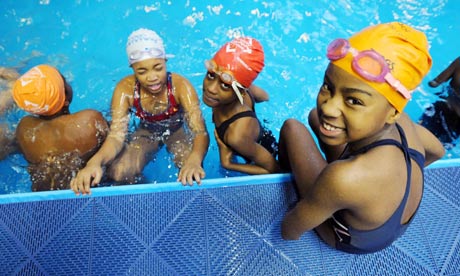
When I was a young girl I spent many days outside playing with my siblings, cousins, and friends. There were two-hand touch football, basketball, kick ball, jump rope, hide-n-seek, relay races, skating, swimming, games we would make up, and so much more. We would wake up eat breakfast and go outside and play. There was four of us so it was plenty to do and plenty of children to play with and we also had cousins spend the night all the time especially during the summer. I played everything and I was very competitive. It was important for us to go outside not only to keep our parents sane from the rough house play and noise in the house but to stay physically fit and it was what we loved to do. My favorite is skating and running. To this day I still skate and have a good time doing it. I still play outside with my children and husband and we also introduce them to the games we played as children. It is important for my children to go outside and experience the great outdoors. We go on nature walks, play tag, swim, and other activities. On rainy days we play electronics, board games, read, and play with dolls (my girls) and action figures and cars (my son). I also enjoy outside activities with my students when I am at work. One activity my students love me playing with them is when I turn the playground into a big ship and the ground is the water and if anyone gets down they are eaten by sharks unless the ship stops. It is a game we made up as a class, so when we go outside that is one of the games we play along with me chasing them playing freeze tag. I want all children to experience how much fun you can have by playing outside instead of watching TV or playing with electronics. Play today is very different because kids are so drawn to technology and that takes away from their outdoor creativity, some social skills, and physical fitness. I make sure I stay physically fit so that I can keep up with my 3 children and my students.
“We are never more fully alive, more completely ourselves, or more deeply engrossed in anything, than when we are at play.”
― Charles Schaefer
― Charles Schaefer
“How would your life be different if...You decided to give freely, love fully, and play feverously? Let today be the day...You free yourself from the conditioned rules that limit your happiness and dilute the beautiful life experience. Have fun. Give - Love - Play!”
― Steve Maraboli, The Power of One
― Steve Maraboli, The Power of One
“Go and play. Run around. Build something. Break something. Climb a tree. Get dirty. Get in some trouble. Have some fun.”
― Brom, The Child Thief
“It is a happy talent to know how to play.”
― Ralph Waldo Emerson
― Ralph Waldo Emerson
“Men do not quit playing because they grow old; they grow old because they quit playing.”
― Oliver Wendell Holmes Jr
― Oliver Wendell Holmes Jr
Saturday, July 13, 2013
Relationships!
I have
close relationships with very select people in my life. Relationships mean a
lot to me and I value them and learn from them. My Lord and Savior, my husband,
my dad, and my mom are the people I have a very close relationship with. Each
relationship is different of course but they all hold a special place in my
heart.
My most important relationship is my spiritual relationship with My Lord and Savior Jesus Christ. This relationship helps me have a positive and effective relationship with the people in my life. Through Christ I can do all things and that has been proven time and time again. I love my Lord and he has been there for me all the time. When I felt I could not go on I would pray and God would give me strength I need to make it through. I would also pray just to say thank you! I love my Lord!
My husband is my all, he is my best friend and we have been together since 1995. This is a man who truly knows me and loves me. This man knows EVERYTHING about me! I can be myself around him and he accepts me for whom I am and supports everything I want to do and become. He pushes me when I feel like giving up and he holds my hand to help me through my troubles. I love him unconditionally and I know he loves me unconditionally. He makes me laugh and we are a great team. He is my soul mate and I cannot see my life without him. We are a team! Our Lord and Savior Jesus Christ, communication, and trust are the key to our healthy relationship. I love this man!
My mom is my life. Even though she is not with me here on earth
she will forever be with me in my heart. I had/have a wonderful relationship
with my mom. She knew me inside and out. She knew the decisions I was going to
make before I made them and she knew when I was keeping something from her. I
could tell my mother any and everything and not worry about her judging me but
giving me the best advice that she could give. My mother is my everything, and
I will always have a close relationship with her. I love my mom with all my heart!
I have a close relationship with my daddy as well, but it is
different from the relationship I have with my mom. My dad is always there for
me when I need him. He calls to check on me and to give me a word of advice, encouragement,
or just to talk. He motivates me to pursue my dreams. He still treats me like
his little girl. We go to the movies together and I enjoy the time we spend
when it is just us. He gives me plenty of spiritual advice. I love my dad!
I only
highlighted three people that I have a close relationship with. However, I have
a close relationship with my three children, my three siblings, my grandparents,
my aunt, and my best friend. Each relationship is different but I love them all.
With losing my mother, I have learned to cherish, value, and respect each
relationship, and to not take them for granted. Relationships are important and
everyone needs to have at least one person they can have a positive
relationship with. I’ve learned that relationships are give and take. The relationships
I have had and still have taught me a lot. They have transformed me into the
person I am and I am proud of that person.
Sunday, June 30, 2013
Inspirational Quotes
"Children are great imitators. So give them something
great to imitate."
Anonymous
"Safety and security don't just happen, they are the result
of collective consensus and public investment. We owe our children, the most
vulnerable citizens in our society, a life free of violence and fear."
"I continue to
believe that if children are given the necessary tools to succeed, they will
succeed beyond their wildest dreams!"
David Vitter, U.S. senator
Sunday, June 16, 2013
Assessments
Assessments
is a topic that I kind of straddle the fence about. I believe assessments are
good because the teacher and parent need to know how their child is doing
academically. By doing this teachers can know what type of interventions need
to be in placed to ensure that the child can be successful and so that the
parent is aware of their child’s academic standing and they can implement any
strategies on their end. I do not
believe that standardized test should be a determining factor of whether or not
a child is going to the next grade level. Some children are not good test
takers but can make straight A’s on their report card all year and fail their
test and have to go to summer school to attempt to past the test again or
repeat the grade. These tests are looking at the academic level of the child,
but what about the social level. This is very important as well. Also these
tests are taking the fun out of learning and teaching. Teachers are teaching to
the test and are not teaching the necessary skills to be successful socially
and skillfully. It has become clear to me that we're
spending way too much time focusing on assessment and evaluation. In fact,
conversations about data driven decision-making, authentic assessment
practices, design-down planning and testing protocols have now worked their way
into the everyday vernacular of teachers and students, and have become such a
strong plot line in the narrative of modern-day schooling, to the point where I
fear that the very ideas and practices that are supposed to make our children's
education richer and more meaningful are actually having the opposite effect.
All indications point to the fact that we have somehow convinced ourselves that
assessment and evaluation policy and practice is our raison d’être in
public schools. Now
don't get me wrong; I'm not opposed to strong, equitable and responsive
assessment practice. This needs to be an important pillar in modern schooling.
I am, however, opposed to anything that suggests that assessment and evaluation
are the new horses and that imaginative, passionate and inspired teaching is
somehow secondary to the project. When richly complex and engaging learning
experiences are sidelined because they are "too difficult to assess",
we are taking something precious away from our children. When our curriculum
design and lesson planning is engineered and guided primarily by the set of
expectations that will be measured and commented on come report card time, then
we run the risk of losing sight of the real needs of the real students that we
work with each day.
When our teachers feel that they have to rush through their work with students so that arbitrary reporting deadlines can be met, then they are forced into covering curriculum as opposed to uncovering or discovering it. When our school days continue to be compartmentalized in order to reflect the boxes on our report cards, then we prevent both students and teachers from exploring the world in all of its integrated beauty. In essence, if we want to encourage our teachers and students to become more deeply involved with what we are asking them to do, then we need to place our conversations about assessment and evaluation in their proper place. And believe me, that place is not in front of engaging, flexible and responsive teaching (www.cea-ace.ca). I really enjoyed reading this article because it allowed me to think more in depth about tests and how it is taking away from our teacher and students.
When our teachers feel that they have to rush through their work with students so that arbitrary reporting deadlines can be met, then they are forced into covering curriculum as opposed to uncovering or discovering it. When our school days continue to be compartmentalized in order to reflect the boxes on our report cards, then we prevent both students and teachers from exploring the world in all of its integrated beauty. In essence, if we want to encourage our teachers and students to become more deeply involved with what we are asking them to do, then we need to place our conversations about assessment and evaluation in their proper place. And believe me, that place is not in front of engaging, flexible and responsive teaching (www.cea-ace.ca). I really enjoyed reading this article because it allowed me to think more in depth about tests and how it is taking away from our teacher and students.
India
In India the schools are overcrowded, there
is not much material, and the teacher-student ratio is very poor. The
enrollment rate in India is 95% but there are signs that the children are not
benefiting from being in school because of it is overcrowded and lack of
materials and teachers. Although the school is given money it is not being used
in the proper areas. The government carried out a national sample assessment
once every three to four years, so how can you determine what the child has
learned within that time frame granted that they are still in school. This
assessment did not cover all educational districts. Pratham took on the liberty
to find out what the kids are learning and the results show that after five years
in school 50% could not read at a level expected after two years of school (www.guardian.co.uk). Pratham's annual status education report, Aser,
is conducted across all 600 educational districts of India and assesses 700,000
children every year. What it has exposed over the last six years is that in
some states, schools may be well-funded but they have failed to translate that
into effective education (www.guardian.co.uk).
Now all of the states and districts in India are aware of the educational gaps
in their students and low performance schools. One of the strengths of the Aser
programme, explains Banerji on a visit to London last week, is that it puts
information in the hands of citizens and helps engage the whole community in
educational issues (www.guardian.co.uk).
It takes a village to raise a child.
When everyone knows the issues then they can be a voice that will be heard to
make the educational issues get better for their children.
ReferencesIs our focus on assessment taking away from our children's education?,=. Retrieved June 16, 2013 from http://www.cea-ace.ca/blog/stephen-hurley/2012/01/1/our-focus-assessment-taking-away-our-childrens-education.
India pioneers volunteer-led assessment of educational standards. Retrieved June 16, 2013 from http://www.guardian.co.uk/global-development/poverty-matters/2011/mar/15/education-goals-assessment-india-school.
Saturday, June 1, 2013
Stressors: Divorce
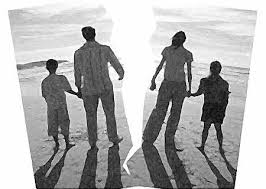
Stress can come in many forms for young children and some we think should not affect children but they do. As a child I grew up in a two parent home until I was around six years old. My parents divorced when I was young and my mother raised me and my other three siblings, but my father was always there. Even though my mother had custody of us he would get us every other weekend and holidays like he was suppose to and was at every event for us. Not having both of my parents under one roof was kind of stressful because there would be times that I would want them both with me. My oldest brother took it hard because he wanted my dad around. He started having low performance in school and becoming rebellious. He received counseling and love and support from both of my parents and became strong again.Overall, I believe I had a great childhood and loving parents that did everything in the world to make sure I was never without.
I understand that in today's society alot of children are not that fortunate. Divorce affects children in so many ways. Especially if the mother or father abandons the child with the marriage. Divorce has emotional, physical, and long term effects on children. Below I listed an example of each emotional, physical, and long term effect.
Teenage children of divorce are three times more likely (35% instead of 13%) to need psychological help within a given year. (Peter Hill - Recent Advances in Selected Aspects of Adolescent Development- Journal of Child Psychology and Psychiatry 1993)
Between children of divorced parents there are relatively more cases of injury, asthma, headaches and speech defects than among children whose parents have remained married. (Dawson -Family Structure and Children's Health and Well Being- National Health Interview Survey on Child Health, Journal of Marriage and Family)
In 1991 a study was done of children from which the parents were divorced six years earlier. The study found that even after all that time, these children tended to be lonely, unhappy, anxious and insecure. (Wallerstein - The Long-Term Effects of Divorce on Children -Journal of the American Academy of Child and Adolescent Psychiatry 1991)
As you can see divorce is a stressor in many ways.
Refernce
Children Divorce Statistics. Retrieved from http://www.children-and-divorce.com/children-divorce-statistics.html. on June 1, 2013.
Stress can come in many forms for young children and some we think should not affect children but they do. As a child I grew up in a two parent home until I was around six years old. My parents divorced when I was young and my mother raised me and my other three siblings, but my father was always there. Even though my mother had custody of us he would get us every other weekend and holidays like he was suppose to and was at every event for us. Not having both of my parents under one roof was kind of stressful because there would be times that I would want them both with me. My oldest brother took it hard because he wanted my dad around. He started having low performance in school and becoming rebellious. He received counseling and love and support from both of my parents and became strong again.Overall, I believe I had a great childhood and loving parents that did everything in the world to make sure I was never without.
I understand that in today's society alot of children are not that fortunate. Divorce affects children in so many ways. Especially if the mother or father abandons the child with the marriage. Divorce has emotional, physical, and long term effects on children. Below I listed an example of each emotional, physical, and long term effect.
Refernce
Children Divorce Statistics. Retrieved from http://www.children-and-divorce.com/children-divorce-statistics.html. on June 1, 2013.
Saturday, May 18, 2013
Malnutrition

Malnutrition
This topic means a lot to me because of the many health concerns we encounter today. There are many young children in other countries that are losing their lives from malnutrition. There is enough food in the world to stop hunger yet there are millions of children dying from malnutrition. The worst disease caused by malnutrition is marasmus. This is a disease where growth stops, body tissues waste away, and an infant victim dies (pp.156, Berger). This disease can be prevented before the child is born, with healthy nutrition in the mother. Kwashiorkor happens after the age of one. The child’s growth slows down; the liver is damaged; the immune system is weakened; the face, legs, and abdomen swell with fluid; energy is reduced, hair becomes thin, brittle, and colorless; skin becomes blotchy (pp. 156, Berger). This disease can also be prevented and treated. Providing the protein that has been long lacked is treatment for kwashiorkor. It is very sad that these young children have to suffer from lack of food. I learned about marasmus and kwashiorkor, even though I have seen the commercials and pictures of the young children with swollen tummies, I did not know the name of the illnesses. I truly believe that no child should ever be hungry. Different parts of the world suffer more than others. Haiti is ranked at number 1 with a 53.3 precentage of malnutrition; the United States come in at number 140 with a 1.0 percentage, and Monaco is number 192 with a 0.0 percentage rate of malnutriton.
References
Berger, K. S. (2012). The developing person through childhood (6th ed.). New York, NY: Worth Publishers.
Saturday, May 11, 2013
Childbirth in My Life and Around the World
The birthing experience I chose to write about is my personal
experience of my first born. In my opinion, no matter how many books you read,
shows you watch, and/or testimonies you hear it never prepares you fully for
the actual birth, especially after you feel that first hard contraction. For my
first pregnancy there are so many different emotions. There is excitement,
fear, nervousness, happiness, anticipation, etc. I remember I had to be induced
and my mother was at my side the whole time. I didn’t want any nurses to touch
me but my mother calmly said I had no choice. I was in labor for 12 hours with
my mom and husband by my side. My labor was quick after my water broke. After
two or three pushes my 7lb 3oz daughter was welcomed into the world by my
mother first. With the proper prenatal care, supporting family, wonderful
nurses and doctors I was able to deliver a healthy baby girl.
In South Africa women deliver their babies under different and
sometimes unhealthy conditions. They have a high maternal death rate because of
unskilled midwives, obstructed labor, diseases, etc. A lot of the women cannot afford the proper
prenatal care or postnatal care because of social status and lack of education,
which leaves them open for the diseases. In rural areas mothers may give birth
in community health centers and/or district hospitals. In populated areas it is
usual to go to provincial tertiary and national central hospitals where wards
can be crowded. Mothers may also give birth at home. In private sectors mothers
have an option of home or hospital birth. Pain relief is available at private
facilities but it is different for public facilities and rural care facilities
offer fewer resources.
Through my comparison I feel that giving birth in South Africa will
only be positive if you have that high social economic status. They offer the
best care depending on the type of area you live in. I believe they should
offer the best care all over therefore the maternal death rate can decrease.
Reference
Anglo
Info. www.southafrica.angloinfo.com/healthcare/pregnancy-birth/giving-birth.
Retrieved May 11, 2013.
Sunday, April 21, 2013
Examining Codes of Ethics
NAEYC Code of Ethical Conduct
· Ethical Responsibilities to Children:
I-1.3-To recognize and respect the unique qualities, abilities, and potential of each child.
This ideal means a lot to me. As an educator it is very important to understand and respect the differences in all children and that they all have something special to bring to their learning environment. I enjoy the differences that all children bring. Their uniqueness teaches us and in return as an educator I grow and find different and creative ways to teach them and enhance their qualities, abilities, and potential.
· Ethical Responsibilities to Families
I-2.3-To welcome all family members and encourage them to participate in the program.
As an educator it is very important to have parental/family involvement in their child's education and development. As a parent I can also see the importance of being involved and staying abreast of all the current events and information regarding my children's education and ways the program/school offer classes for parents. Being and involved parent in a welcoming environment is also important to your child.
· Ethical Responsibilities to Colleagues
A-Responsibilities to co-workers
I-3A.2-To share resources with co-workers, collaborating to ensure that the best possible early childhood care and education program is provided.
Everybody in this field is there to better the lives of children and their families. If you have a great idea it will not benefit others if you keep it to yourself. We are not here to get "brownie points" for out shining our co-workers. The "brownie points" come in when you work together and share resources and creativity that will make a difference in the lives of young children and find ways to improve and make the program better.
DEC Code of Ethics
· Responsive Family Centered Practices
4. We shall empower families with information and resources so that they are informed consumers of services for their children.
We want families to have all the resources they need to make sure they have the best care and education for their child. As a professional in this field I believe it is our responsibility to provide families with the information they need to ensure the best quality care and programs.
· Evidence Based Practices
2. We shall use every resource, including referral when appropriate, to ensure high quality services are accessible and are provided to children and families.
I believe this is so important and it ensures that children and families will have the services they need for success.
· Professional Development and Preparation
4. We shall support professionals new to the field by mentoring them in the practice of evidence and ethically based services.
It is important to make yourself resourceful for new professionals. It can be overwhelming for new teachers in this field but with the help of a mentor it can make it a little smoother. I am mentoring a new teacher now and she has grown and learned so much. I also have learned how to mentor and become a better co-worker and professional through the mentoring program as this is my first time mentoring.
Subscribe to:
Comments (Atom)